
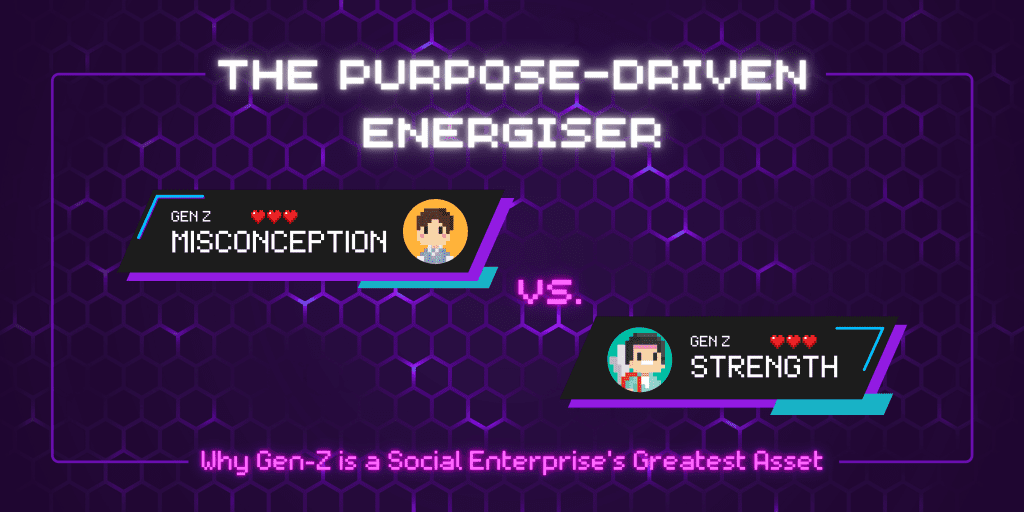
In an era defined by a unique convergence of technological upheaval, a global pandemic and a widespread awakening to social and environmental crises, a new generation is not just entering a workforce — they’re redefining it. Generation Z, born roughly between 1997 and 2012, is often a source of bewildered headlines and misinformed criticisms. They are frequently labelled as entitled, easily distracted and disconnected, with a work ethic that’s often questioned and deemed to prioritise personal happiness over corporate loyalty. Yet, these popular narratives miss a crucial, more complex truth.
This generation’s reputed ‘flaws’ are, in fact, the very traits that make them an ideal and powerful force for the rapidly growing world of social enterprise. Unlike previous generations that may have accepted a clear separation between a ‘9 to 5’ job and personal values, Gen-Z is demanding a fusion of the two. They are not content with traditional corporate social responsibility as a side project: they want to work for organisations where the core mission is to create positive change.
Challenging common misconceptions about Gen-Z can reveal how their perceived weaknesses are powerful strengths that can propel social enterprises forward, from their innovative approaches to their unwavering commitment to meaningful change.
A Metamorphosis of a Misunderstood Generation
To truly understand their potential, we must first examine the layers of the Gen-Z cocoon. What the traditional workplace often labels as a flaw — be it a refusal to compromise on values or a demand for flexibility — is truly a powerful catalyst for a different kind of progress.
This article tackles these common stereotypes, reframing perceived weaknesses as compelling strengths, particularly for organisations built on purpose. Each ‘misconception’ reveals an underlying value that, when harnessed and nurtured by social entrepreneurs, becomes a critical driver of innovation, authenticity and long-term impact.
Misconception No.1: Gen Zs Are Entitled and Lack Work Ethic
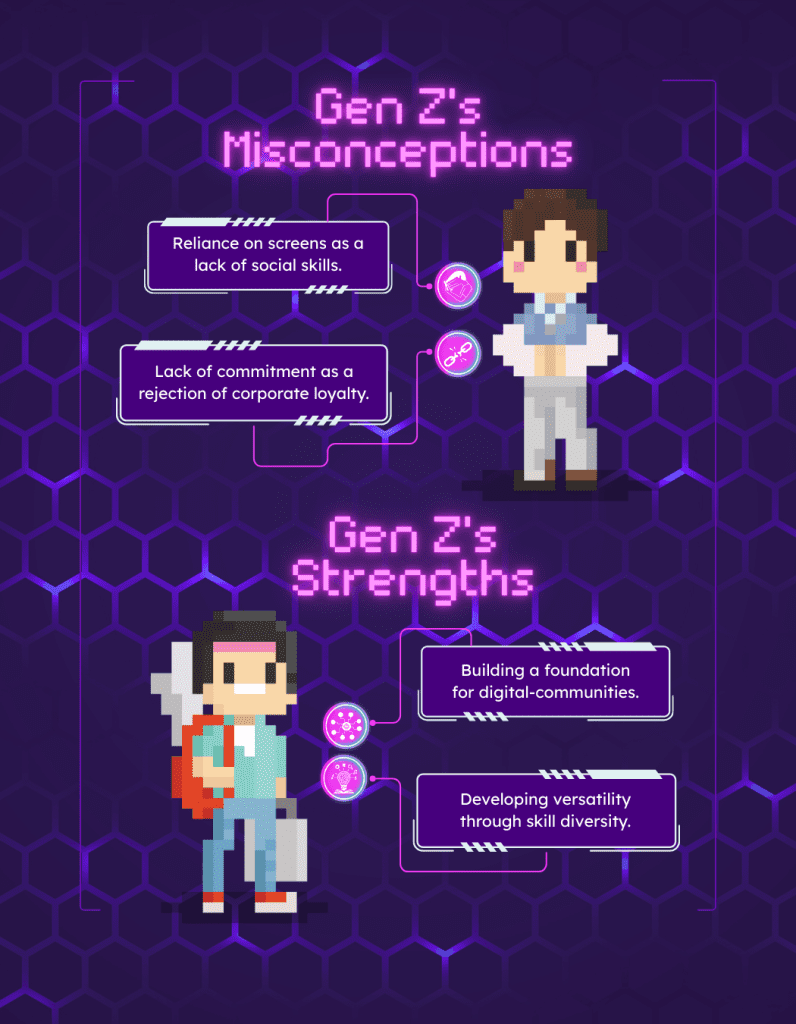
Often, the most pervasive criticisms levelled against Gen-Z are the idea that they are lazy, entitled and don’t possess the same traditional ‘grit’ or work ethic as previous generations. This stereotype often stems from their vocal demands for work-life balance, their prioritisation of mental health and their vocal rejection of ‘hustle culture’.
Compared to their predecessors, who may have defined dedication by long hours, Gen-Z’s approach is often misunderstood as a lack of commitment. The perception of laziness is also fuelled by their comfort with flexible work arrangements, such as remote or hybrid schedules. This is commonly seen as a desire to avoid physical presence or social interaction.
When they express a need for a job that doesn’t align with their values, it is often dismissed as a sign of disloyalty and an expectation of instant gratification. This viewpoint fails to recognise the underlying motivations driving these behaviours and perpetuates a narrative that is increasingly out of step with the realities of the modern workplace. Additionally, the Deloitte 2024 Global Gen Z and Millennial Survey found that 86% of Gen Z and 89% of millennials say having a sense of purpose is very or somewhat important to their overall job satisfaction and well-being.
Strength No.1: The Demand for Purpose-Driven Work
What is often labelled as entitlement in Gen-Z is a powerful demand for meaningful work. Unlike previous generations who may have separated their job from personal values, Gen-Z is actively seeking a seamless combination of both. They see a paycheck as only part of the compensation; the other, equally critical part is the tangible impact they can make.
This isn’t laziness — it’s a refusal to waste their time and talent on work that doesn’t contribute to a greater good. For a social enterprise, this is not a challenge but a profound opportunity. A social enterprise’s mission — whether it’s fighting climate change, ensuring fair labour practices or promoting equitable education — is already aligned with Gen-Z’s core values. This alignment is brought about by the rising dominance of social media as they grow up, which means you’re hiring more than just an employee: you’re attracting a passionate advocate.
Their desire for work-life balance translates into a demand for efficiency and a rejection of performative ‘hustle culture’. They are motivated not by the number of hours they clock, but the tangible progress they can see and measure. When a Gen-Z team member is connected to the cause, they are fiercely dedicated, creative and proactive in finding solutions because they believe in the mission on a meaningful level. Their ‘entitlement’ is simply the expectation that their work will serve a purpose beyond a quarterly profit report — an expectation that a social enterprise is uniquely positioned to fulfil.
What’s been your experience hiring Gen-Z? Entitled or misunderstood?
Misconception No.2: Gen-Z is Disloyal and Are Just “Job Hoppers”
Another common criticism levelled at Gen-Z is their perceived lack of loyalty. They are frequently labelled as “job hoppers” — a term describing one who is quick to leave a company for a better offer, a different title or a more exciting opportunity. This behaviour is often seen as a sign of unreliability and a fundamental disregard for institutional commitment.
From a traditional corporate perspective, where long-term tenure was a mark of dedication and stability, this constant movement is viewed as a significant liability. This appears as a risky investment for any company’s training and resources. The narrative suggests that Gen-Z is looking out for themselves, without any sense of dedication to a team or an organisation’s long-term goal, ultimately leaving a company high and dry the moment something better comes along.
For previous generations, especially Boomers and Gen-X, a long career at a single company was a defining aspect of job security. The unspoken social contract was that an employee provided loyalty and hard work in exchange for stability, a pension and a clear path for advancement. However, that contract was largely broken by major economic shifts and mass corporate layoffs in the 2000s, particularly following the 2008 financial crisis.
The financial crisis resulted in mass layoffs and economic uncertainty, affecting the generation whose children are the ones entering the workforce now, i.e. Gen Z. This has had a massive impact on how Gen Z views their desired career path — no longer linear with few entities but a lilypad path for an ongoing mission to acquire new skills and experiences.
This is often a strategic decision driven by a desire for continuous growth and an awareness that a diverse resume is a more resilient one in an unpredictable economic climate. In fact, a recent JobStreet by SEEK survey found that 55% of employees aged 24 and below would look for a new job within a year if their current role no longer aligns with their career goals.
Strength No.2: The Agility of A Skill-Focused Workforce
What is often dismissed as Gen-Z’s disloyalty is actually a highly strategic and agile approach to career growth, from their unique positions as observers. This generation watched their parents and older family members lose jobs after years of dedication, learning a painful lesson that a company’s promise of long-term security is no longer dependable. They concluded that true job security today comes not from a single employer, but from a diverse and adaptable skill set.
For a social enterprise, this is a significant advantage. Social businesses often operate in dynamic and resource-lean environments, requiring a workforce that is adaptable and innovative. Gen-Z’s varied experience allows them to bring fresh perspectives and a cross-pollination of ideas from different industries and organisational cultures. They are not content to sit in one role for decades; their drive for new challenges means they are proactive in seeking out opportunities for professional development, which directly benefits the organisation. Their “disloyalty” to a corporate structure is balanced by a fierce dedication to a cause they believe in. If a social enterprise can align its mission with its values, it gains an employee who is not just filling a role but is a passionate advocate, ready to contribute a diverse and ever-growing skill set to solve complex problems.
Misconception No.3: Gen-Z is Antisocial and Can Only Communicate Digitally
Another common criticism of Gen-Z is the belief that they are antisocial, preferring the isolation of a screen to face-to-face interaction. This misconception stems from their fluency with technology and their comfort with text-based and online-only communication.
Older generations often view their constant engagement with social media, messaging apps and virtual platforms as a flaw. This is seen as a lack of interpersonal skills necessary for effective teamwork and building genuine relationships in a professional setting. The stereotype suggests they would be uncomfortable with impromptu office conversations, client meetings or any form of nuanced, in-person discussion, creating a potential barrier to traditional collaboration.
This view, however, confuses a preference for efficiency with a lack of ability. Gen-Z didn’t just grow up with technology; they matured in a world where digital tools are the primary vehicles for connection, community-building and information sharing. Their communication style is a product of this environment, and to label it as “antisocial” is to misunderstand its depth and purpose.
Strength No.3: The Power of Digital-First Community
What is often perceived as Gen-Z’s antisocial behaviour is, in fact, a powerful aptitude for building and mobilising digital-first communities. This generation’s communication style isn’t a limitation; it’s a highly effective tool for connection in the 21st century.
They have an innate understanding of how to use social media, virtual platforms and messaging apps to create authentic, scalable relationships. For a social enterprise, this is an invaluable asset. To succeed, these organisations must inspire and rally people around their mission, a task that Gen-Z is uniquely equipped to handle.
Their ability to craft compelling narratives through short-form video and engage with followers in real-time allows a social enterprise to connect with beneficiaries on a global scale. This proficiency bypasses traditional, expensive marketing channels and builds a dedicated grassroots following. The “antisocial” stereotype is a misreading of their true capability: they don’t avoid people, they simply connect with them as directly and efficiently as possible, turning a digital space into a vibrant and engaged community dedicated to a cause.
Misconception No.4: Gen-Z is Financially Driven and Expects Unrealistic Salaries
The final and particularly cynical misconception is that Gen-Z expects unrealistic salaries. This viewpoint is often linked to the economic realities they have inherited, such as rising student debt and soaring living costs.
This narrative, however, misinterprets their desire for financial stability as pure materialism. It fails to recognise that for a generation facing unique economic pressures, a fair and transparent salary is a prerequisite for security, not the sole purpose of their work. They are also challenging the very foundation of how work is valued, often seeking to be compensated based on their output and impact rather than the time they spend.
Strength No.4: Turning Mismatched Expectations into a Transparent Partnership
The paradox of a fresh graduate wanting higher pay without equivalent experience is a real challenge, but a social enterprise can turn it into a unique strength. Instead of seeing this as a red flag, the organisation can use the situation to demonstrate its core values.
It can begin with a transparent conversation about its financial model and how its compensation is directly related to outcomes that further the mission. By honestly communicating its budget and how every dollar is used for social impact, the social enterprise builds immediate trust and proves its integrity, setting it apart from traditional corporate competitors.
This transparency creates an opportunity to invest in potential and passion. Rather than being paid for hours logged, Gen-Z seeks compensation tied directly to their output and tangible results, especially their tendency to be multiskilled, which is most likely an asset to a social enterprise. This creates a transparent partnership where the company gets a deeply committed employee and the individual gets a career path focused on growth, not just a paycheck.
A New Paradigm
The narrative surrounding Gen-Z is ripe for a rewrite. What is often seen as a collection of flaws — a rejection of traditional work cultures, a reliance on technology and a demand for instant gratification — is simply a blueprint for a more meaningful future. The evolution of this generation reveals that their perceived weaknesses are not liabilities but powerful assets.
Their refusal to engage in meaningless work becomes a wellspring of purpose, their so-called disloyalty is a catalyst for an agile and skill-driven workforce, their digital-first communication builds scalable communities, and their financial pragmatism serves as a demand for critical transparency and accountability.
For social enterprises, this is not a challenge to be navigated but a golden opportunity to lead. This generation is not asking for a handout; they are demanding that work be a vehicle for change. By aligning with Gen-Z’s values, social enterprises can secure a workforce that is not just productive but passionately invested in the mission. In a world that is increasingly looking for genuine impact, Gen-Z stands ready, not to simply work but to build a better one.
Social enterprise leaders, which of these misconceptions did you have?
About the Author

Nurul Iffa is a communications student at UOW Malaysia (UOWM), Glenmarie, where she is pursuing her bachelor’s degree. She is currently working as a copywriting intern, gaining hands-on experience and applying her passion for written communication.
Regarding Brand Geeks Inc
Established in 2011, Brand Geeks Inc is a boutique branding and marketing consultancy dedicated to fostering World-Changing Legendary Brands. Our proprietary approach, TurbochargeMyBrand, has empowered hundreds of new and existing businesses by balancing strategy, creativity, engagement and technology. Turbocharge Cyberview 2025 is the latest addition to our commitment to brand growth with AI-powered marketing.
We have helped brands like MyTeksi, SmartSelangor, Evenesis, Billplz and many more reach their full potential. Explore our portfolio and services at brandgeeksinc.com
Ready to Turbocharge Your Brand?
If you want to do it yourself: Get a copy of the Do Your Own Branding (DYOB) Toolkit book to start your branding journey.
If you’d like our help: Get our consulting services for your branding needs; email [email protected].